REF Submission – Unit of Assessment 7
SUERC and the School of Geographical and Earth Sciences (GES) are jointly submitted to REF Unit of Assessment 7: Earth Systems and Environmental Sciences, reflecting a strong and integrated research partnership. This joint submission showcases the complementary strengths of GES as a research-led academic unit and SUERC as a centre of excellence in analytical science and isotope-based research. Together, we deliver internationally recognised, interdisciplinary research across geoscience, environmental science, and planetary studies, underpinned by shared infrastructure, co-supervised postgraduate students, and collaborative impact activities.
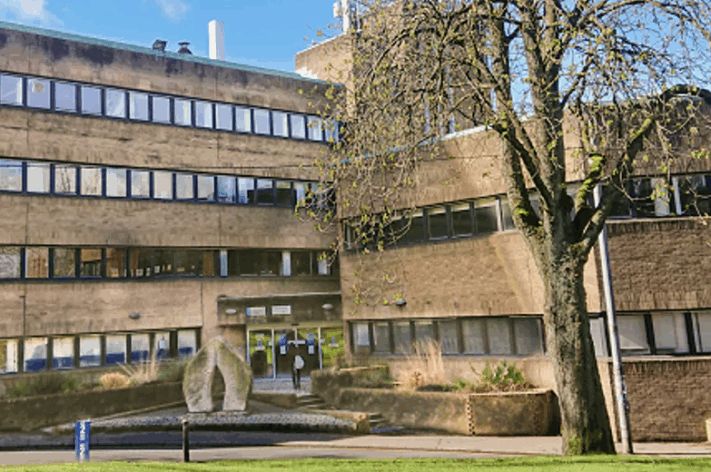
School of Geographical & Earth Science, University of Glasgow
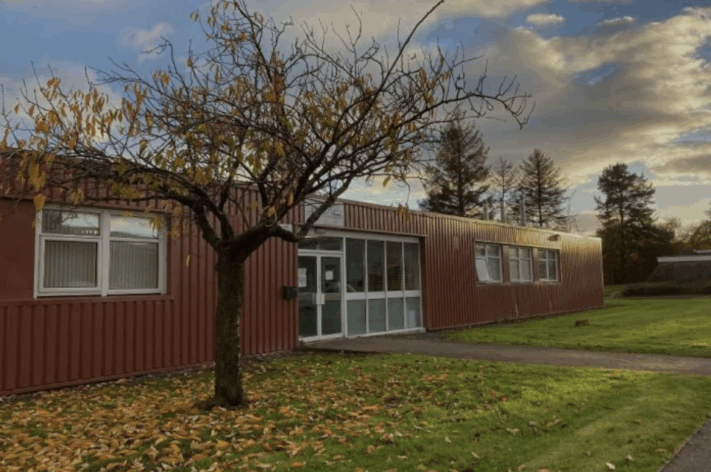
SUERC: Centre for the Isotope Sciences
This collaboration is characterised by a range of integrated activities that strengthen both research and impact across the two units. Key areas of collaboration include:
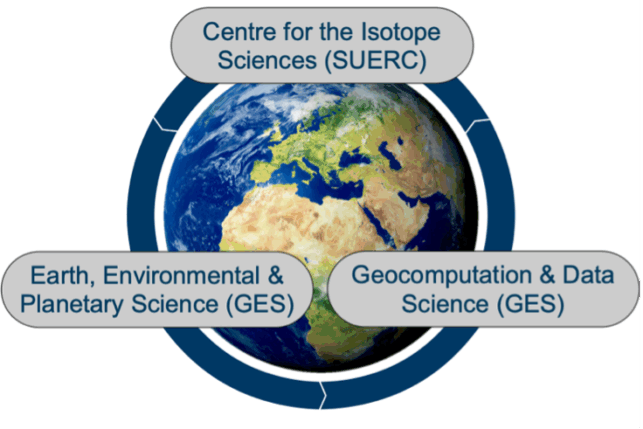
- Complementary research themes (Figure 2), bi-weekly research group cluster meetings, and cross-cutting research seminars.
- Multiple collaborative research projects/grants.
- Co-supervision of PhD students.
- Shared access to analytical and high-performance computing resources.
- Collaborative research impact and equality, diversity, and inclusion (EDI) activities.